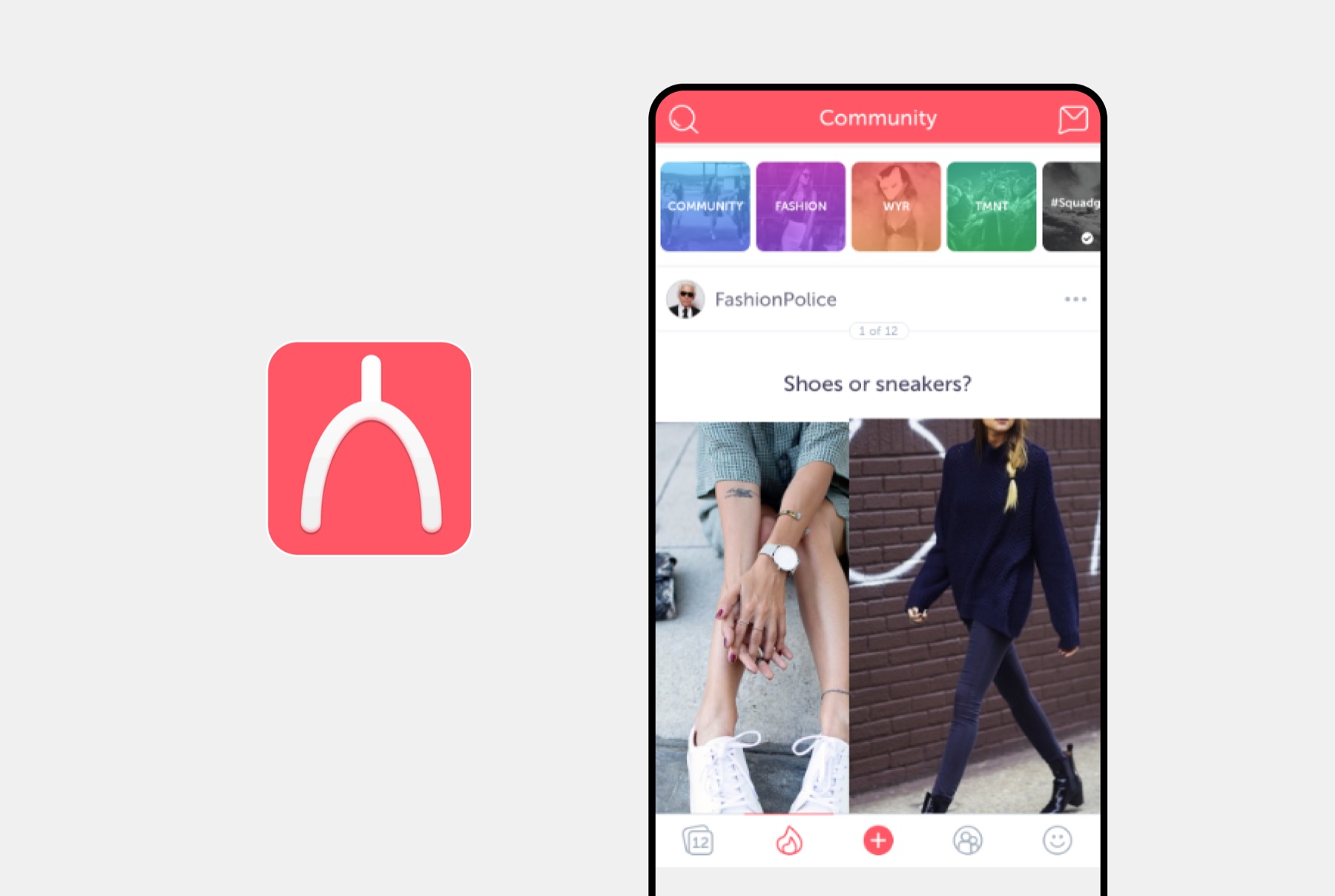
Wishbone
Tap-to-vote social app built on side-by-side comparisons.
What it is
A social app built on one question: this or that? Users made side-by-side comparisons and voted on each other's, and it turned out teens would do it hundreds of times a day.
Problem
Most social apps ask you to make something before you can join in: write a post, pick a photo, put your taste out there for people to judge. For teens, that's a lot of social risk. Wishbone shrank participating to a single tap: two options, pick one, see what everyone else picked.
My role
I started as a designer on Wishbone and became VP of Product, managing PMs and designers across Wishbone and Mammoth's other apps and working closely with the user acquisition team on ad creative. I stayed the principal designer on Wishbone throughout. Since most of our users were girls aged 12 to 16, I also owned safety: reporting, blocking, the follow model that controlled who could reach whom, and the tools our moderators used to review flagged content.
Outcome
I led growth to 30M US iOS monthly actives, including 2 million girls aged 12 to 16 every month. Users made 80 million cards and cast 18 billion votes, about 352 million a month. Wishbone ranked consistently in the US Top 50.
Case study
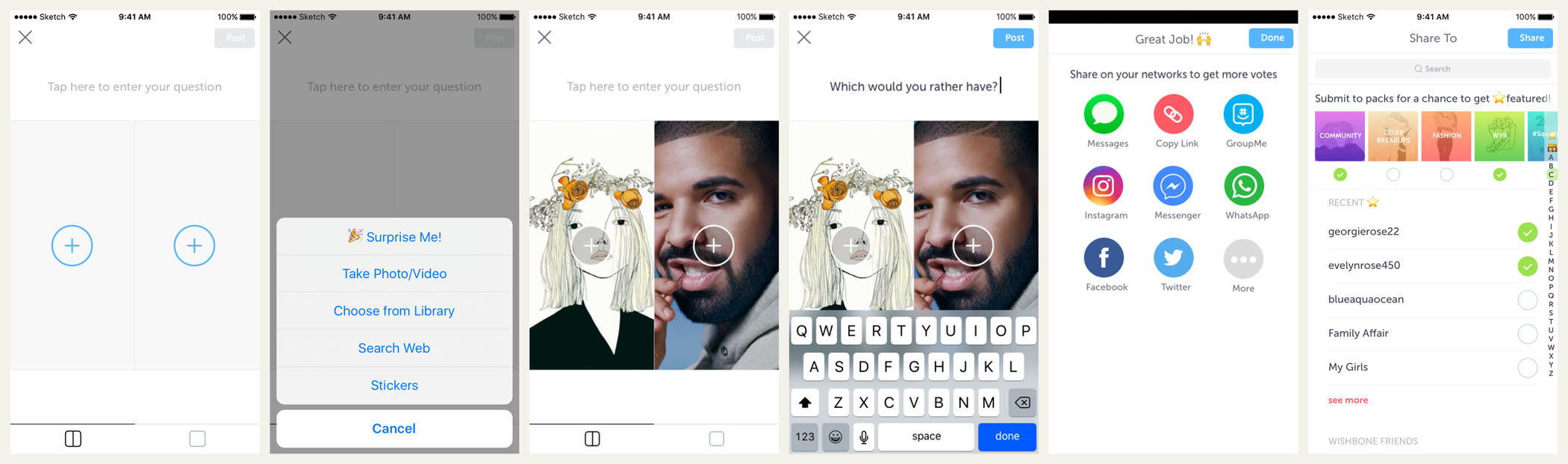
Making a card
Two empty panes and a picker with web search and stickers, so you never faced a blank canvas. Posting took about fifteen seconds, and the share prompt appeared the moment a card went live, which is when creators want votes most.
Case study
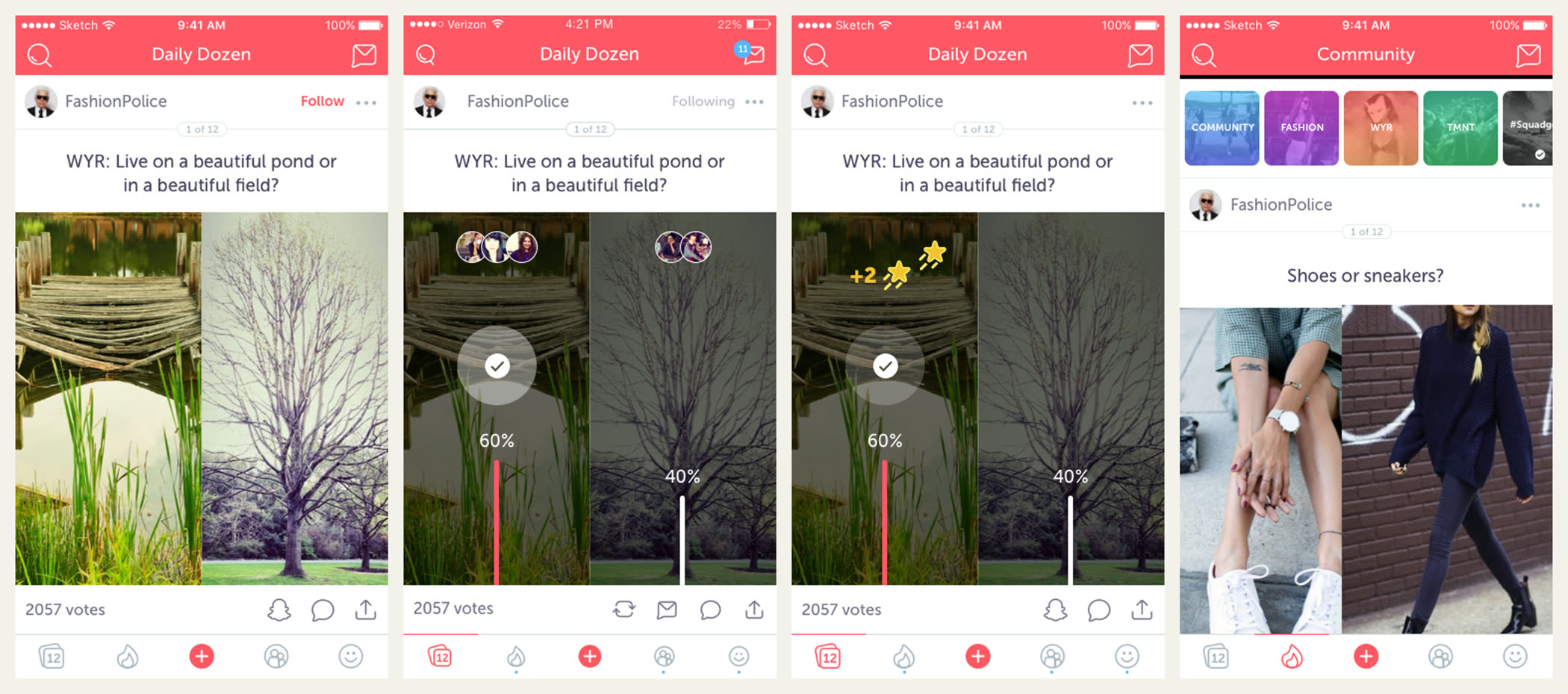
Voting
One tap cast your vote and showed the split right away. That reveal was the reward, and it's what kept people voting.
Case study
Leaderboard and BFFs
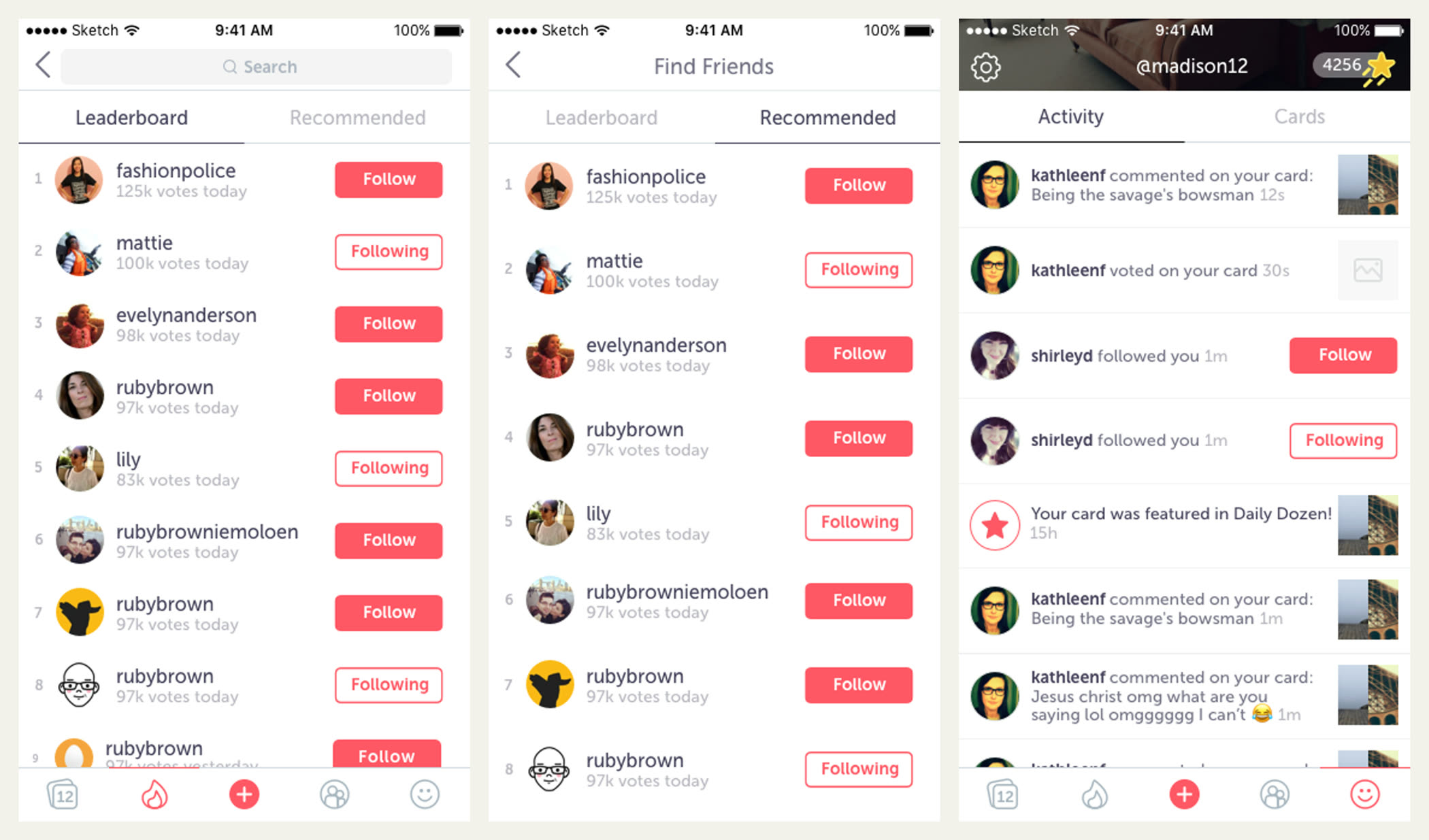
Votes worked as a public score, and the app ranked people by how many they got that day. Status was the reason to post again, and the activity feed kept showing you who had voted, commented or followed.
Case study
Direct messages
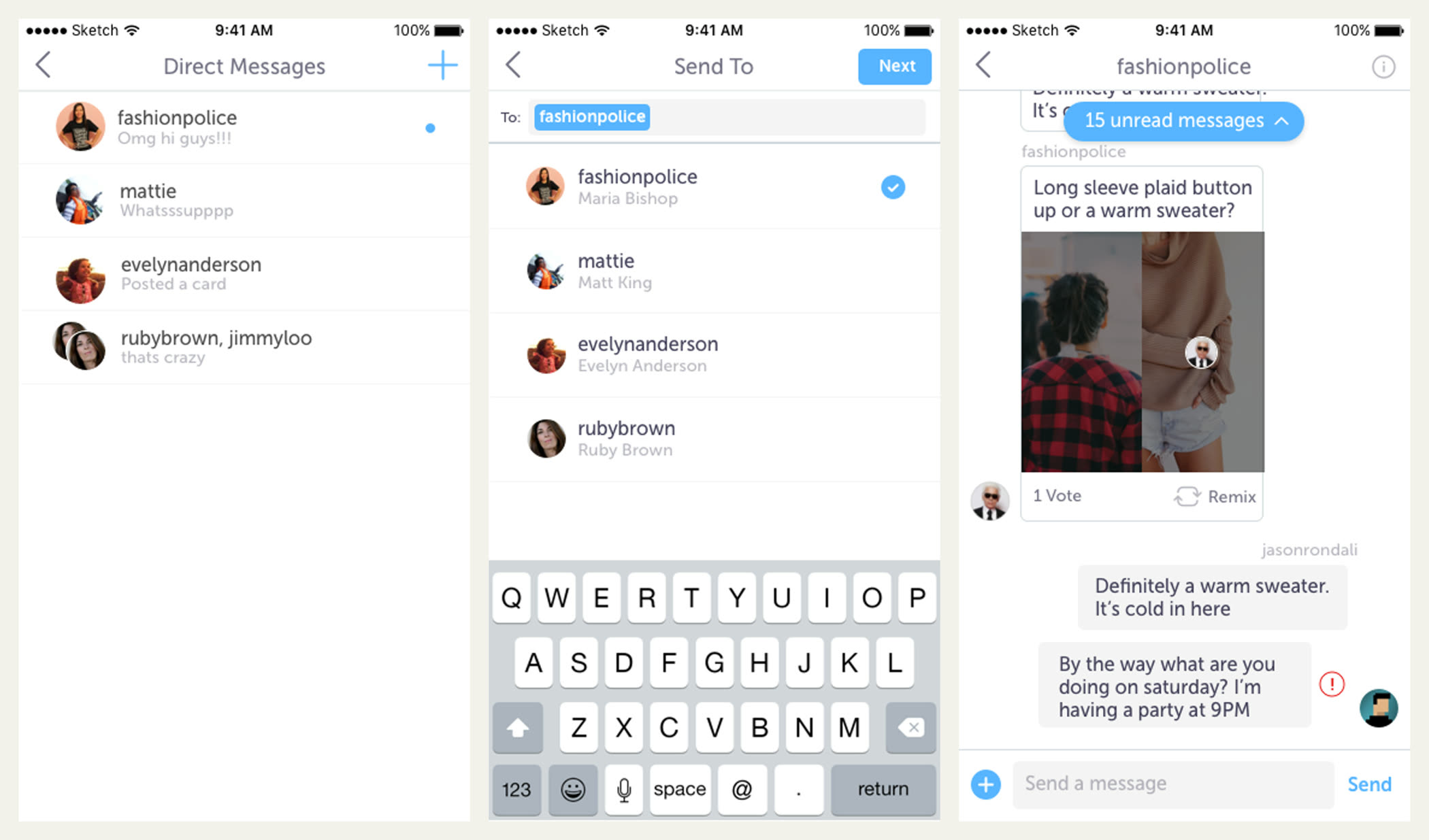
You could send a card straight into a chat, where friends voted on it or hit remix to reply with their own. It gave people a private option when the public feed felt like too much.
Case study
Safety by design
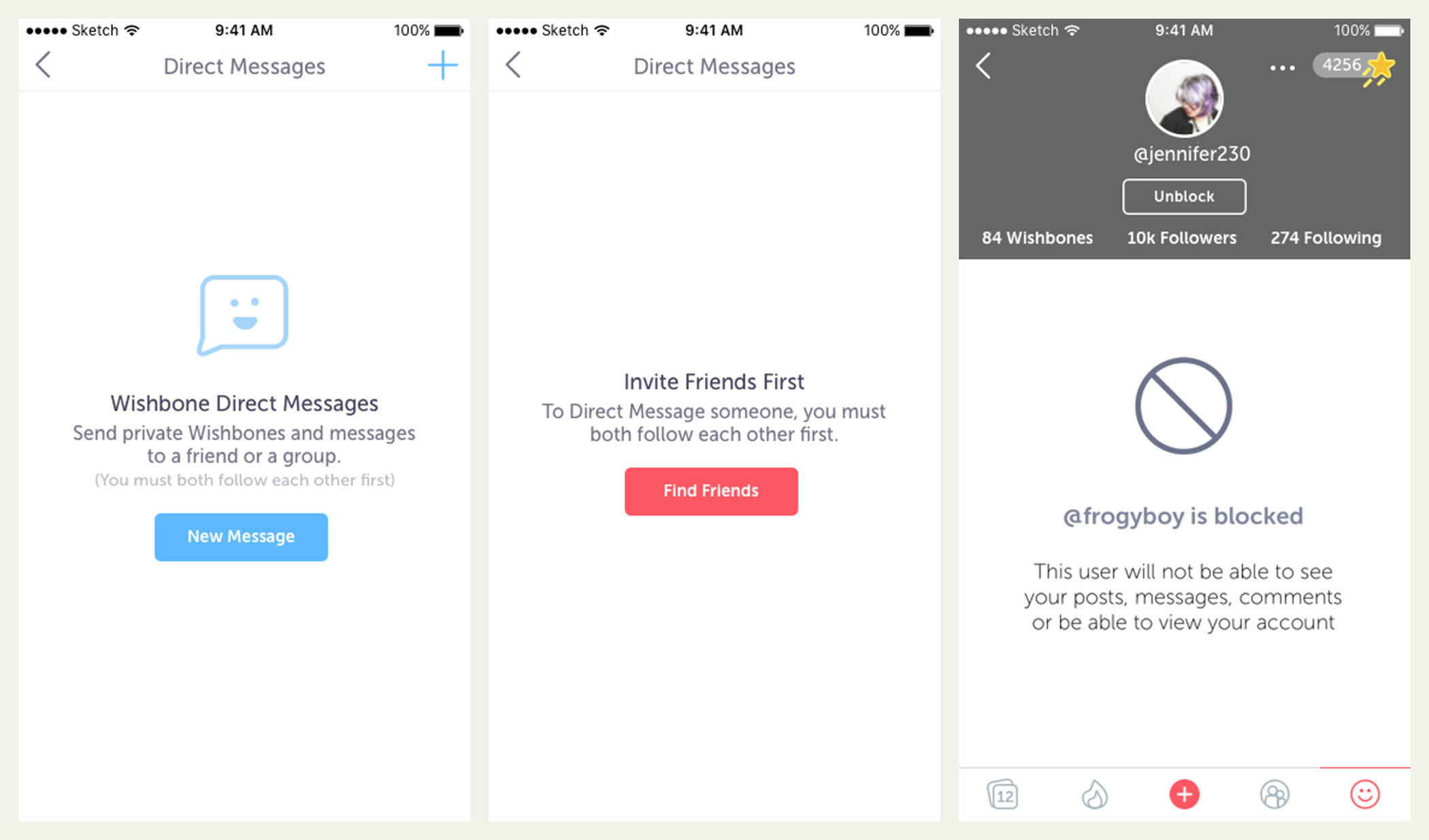
DMs only opened once two people followed each other, so a stranger couldn't message a 12-year-old just by knowing her username. Blocking told you exactly what it would do, with no vague confirmation screen. For users that young, protection has to be on by default.
Case study
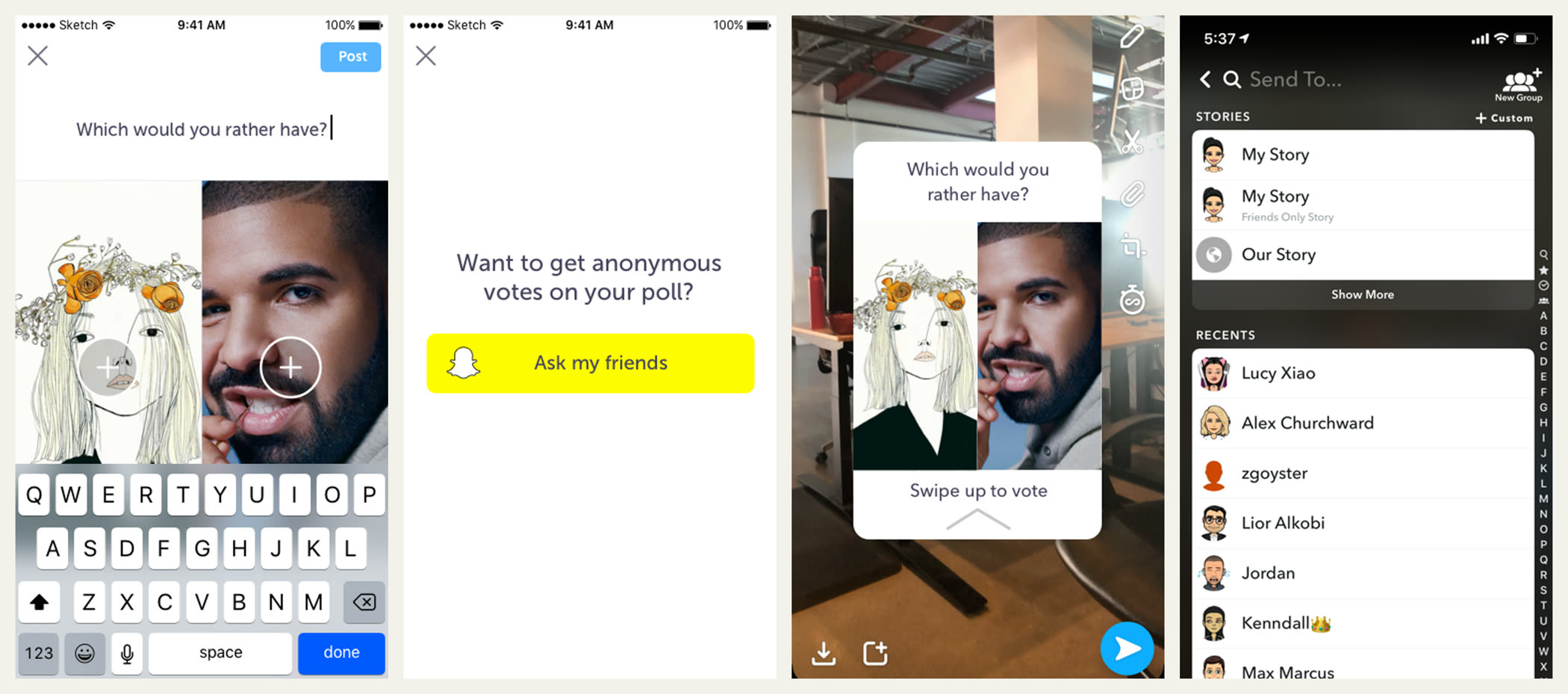
The Snapchat loop
When you finished a card, Wishbone offered to post it to Snapchat so friends could vote anonymously. It created a ready-made snap with swipe-up-to-vote, so friends could vote without making an account.